
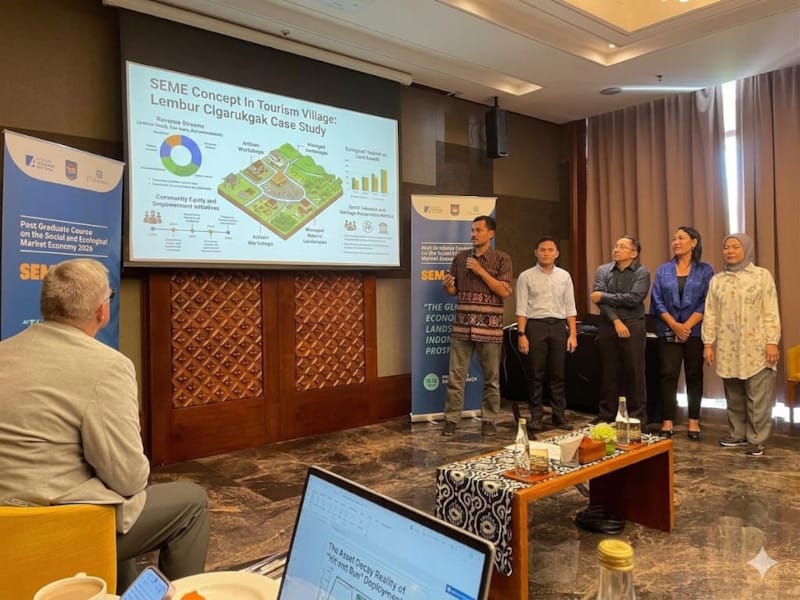
NUSA DUA, BALI — The potential of community-based tourism villages received attention at the 2026 Postgraduate Course on the Social and Ecological Market Economy (SEME), held from May 18–21, 2026, at the Sofitel Bali Nusa Dua Beach Resort. The forum, organized by the Konrad Adenauer Stiftung in collaboration with Paramadina University, raised the theme “The Global Economic Landscape & Indonesia’s Prospect” and brought together participants from various strategic sectors in Indonesia.
Amid discussions on global economic challenges, the green economy transition, and sustainable development, Lembur Cigarukgak from Subang Regency, West Java, was also introduced as a form of community-based tourism village development that has significant potential for development through the Social and Ecological Market Economy (SEME) approach.
This idea was presented by Asep Kurniawan, a delegate from STIE Sutaatmadja, who attended the forum along with approximately 20 other participants from academics, local government, media journalists, NGOs, business practitioners, and expert teams from the Indonesian House of Representatives (DPR) and Regional Representative Council (DPD).
In the group discussion and presentation session, Asep highlighted the case study of Lembur Cigarukgak as a model tourism village that relies not only on the natural beauty of the countryside but also on the strength of local culture, community participation, and the spirit of mutual cooperation. He believes the SEME concept will be relevant for the development of tourism villages in Indonesia, particularly to create a balance between economic growth, social welfare, and environmental sustainability.
“Tourism villages like Lembur Cigarukgak possess very strong social and cultural capital. If managed properly with a sustainable approach, this village can serve as an example of how local communities can become actors in economic development while simultaneously safeguarding the environment and culture,” Asep said.
Lembur Cigarukgak itself is considered to possess the authentic appeal of a Sundanese village. Its pristine natural landscape, a community that still upholds traditional values, and the potential for developing educational, cultural, and creative economy tourism are unique strengths amidst the growing trend of experiential and sustainable tourism.
The workshop featured keynote speaker Marcus Marktanner from Kennesaw State University, who discussed the changing global economic landscape and the opportunities for developing countries in the era of green economic transformation. In addition, several national institutions, such as the Institute for Development of Economics and Finance (INDEF), The Habibie Center, the Bali Provincial Government, and Paramadina University, provided strategic insights into the future direction of Indonesia’s development.
Bali, as the venue for the event, also offered important reflections on the challenges of the modern tourism sector. Amidst the booming tourism industry, issues of environmental sustainability, economic equity for local communities, and cultural preservation were key concerns for forum participants.
In this context, the development of tourism villages like Lembur Cigarukgak is seen as an alternative for a more inclusive and sustainable future for Indonesian tourism. A community-based approach is believed to be able to deliver more equitable economic benefits while preserving local cultural identity amidst globalization.
The Indonesian delegation’s participation in this forum demonstrates that regional tourism villages have significant opportunities to emerge in the global development arena. From a village in Subang to an international forum in Bali, Lembur Cigarukgak conveys the message that economic development does not have to abandon cultural roots and environmental sustainability. []
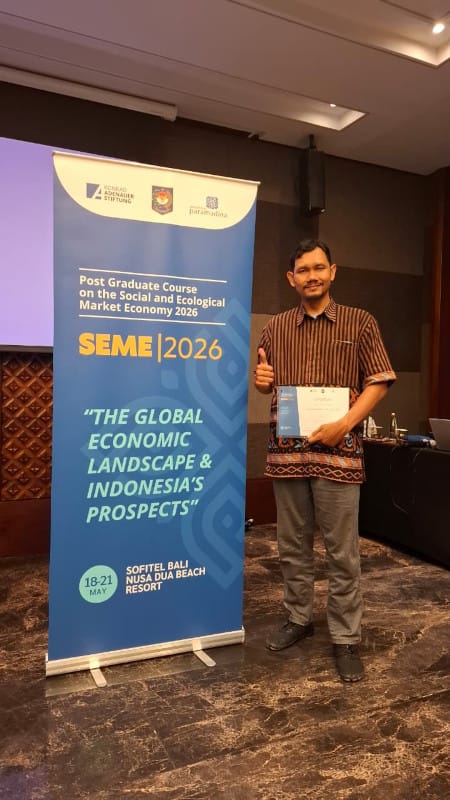
Writer: Asep Kurniawan